

 (587) 316-8169
It’s 3 AM. A sound from the kitchen jolts you awake. Is your fridge dying? Should you panic? Before you spiral into appliance anxiety, take a breath. Most house appliances make dozens of sounds during normal operation. Motors hum, pumps circulate water, and fans spin. The trick is knowing which noises signal trouble and which are just part of the job.
When you identify your sound, note when it happens, how loud it is, and how long you’ve been hearing it. This guide helps you diagnose the problem and recognize when it’s time to call for repairs.
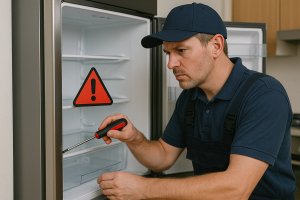
Never-Ending Fridge’s Background Noise
Humming or Buzzing (Normal)
Refrigerators run constantly, so a low, steady hum is completely normal. This fridge making buzzing noise comes from the compressor motor doing its job. The sound might get slightly louder when the compressor kicks on, then quieter as it settles into its rhythm.
Dry climates can make refrigerator noise seem louder than in humid areas. If the hum isn’t drowning out conversation and your fridge is cooling properly, you’re fine.
Clicking Sounds (Normal / Monitor)
Occasional clicks every few hours are normal. Your defrost timer switches on and off, or your ice maker fills and ejects ice. These single clicks are nothing to worry about. But rapid, repeated clicking (click-click-click-click) means the compressor relay might be failing. It’s not an emergency, but you should think about scheduling a fridge inspection.
Grinding or Scraping (Call Soon)
Metal-on-metal grinding is never good. This could mean ice jammed in your ice maker, a fan blade hitting ice buildup, or something more serious. If your fridge is still cooling, you have some time, but if it’s not, call as soon as possible.
Should Your Dishwasher Sound Like That?
Swishing and Humming (Normal)
Water sloshing around and a steady hum during wash cycles are exactly what you want to hear. The wash pump and drain pump create these sounds as they circulate and drain water.
Grinding or Grating (Monitor)
Hard water is notorious for causing mineral buildup on pumps and spray arms. If you hear grinding, stop the cycle and check the filter area for debris. A glass shard or bone fragment might be stuck in the pump. Run a cleaning cycle with vinegar to dissolve mineral deposits. If grinding continues, the pump might be damaged and needs professional service.
Squealing ( Call Soon)
A high-pitched squeal means the pump motor bearing is wearing out. Schedule a service call within a week or two. Your dishwasher will still work, but the problem gets worse over time.
Washing Machine Making Loud Noise When Spinning
Banging or Thumping (Monitor)
If your washing machine spin cycle sounds like it’s trying to escape, you probably have an unbalanced load. Stop the cycle, redistribute clothes evenly, and restart. Many homes have basement laundry rooms with concrete floors that amplify vibration. Check that your washer is level and consider anti-vibration pads.
Persistent banging despite balanced loads means worn shock absorbers or broken suspension springs. This needs attention within a couple weeks.
Grinding During Spin (Call Soon)
A grinding sound during any cycle often means something is stuck between the drum and tub. Coins, wires, and underwire from bras are common culprits. Check for objects, then spin the drum by hand. It should rotate smoothly and quietly. If it doesn’t, call for service before causing more damage.
Dryer Making Squeaking Noise
Squeaking or Squealing (Monitor)
A dryer squeaking during operation usually means drum rollers are wearing out. This is the most common cause. The belt, idler pulley, or drum bearing could also be the problem. Monitor it for a few weeks. If it gets louder, schedule a service. Drum roller replacement typically costs $150-$300 and is worth fixing if your dryer is less than 10 years old.
Grinding or Scraping (Call Soon)
Metal scraping metal is bad news. Check for coins or other objects stuck between the drum and housing. If the grinding persists, the drum seal might be worn out, causing the drum to rub against the housing.
Warning Signs DIY Isn’t Enough
If a sound is getting progressively louder, if your appliance isn’t performing its basic function, or if you smell burning, call for help immediately. Don’t wait for a complete breakdown. Early intervention prevents expensive emergency repairs.
When you call, be ready to describe the sound (grinding, squealing, clicking, humming), when it happens (during spin, constantly, intermittently), and how long you’ve noticed it. This information helps technicians diagnose the problem and bring the right parts.
Essentials to Keep Your Appliances Running
Regular maintenance prevents many strange sounds. Keep appliances level to reduce vibration. Clean condenser coils on your fridge annually. Run dishwasher cleaning cycles monthly to combat hard water. Clean your dryer lint trap after every load and the vent annually.
Most appliance noises are just machines doing their jobs. But when something doesn’t sound right, you’ll know it. Trust your instincts, use this guide, and call for professional help when needed.
Your appliances are talking to you and now you know what they’re saying.


